Redesigning the Checkout Flow to Recover a 56% Exit Rate
Role
Lead Designer
Timeline:
2 weeks (design to dev handoff)
Team:
Product Manager, Engineering, Senior Management stakeholders
My responsibilities:
Competitor research, "How Might We" workshop facilitation, wireframing, UI design, stakeholder alignment
The Problem
I was given a clear business problem: ExpressVPN's order page had a 56% exit rate — more than double the industry average of ~25%. Users were arriving at the page with some level of interest but leaving without converting.
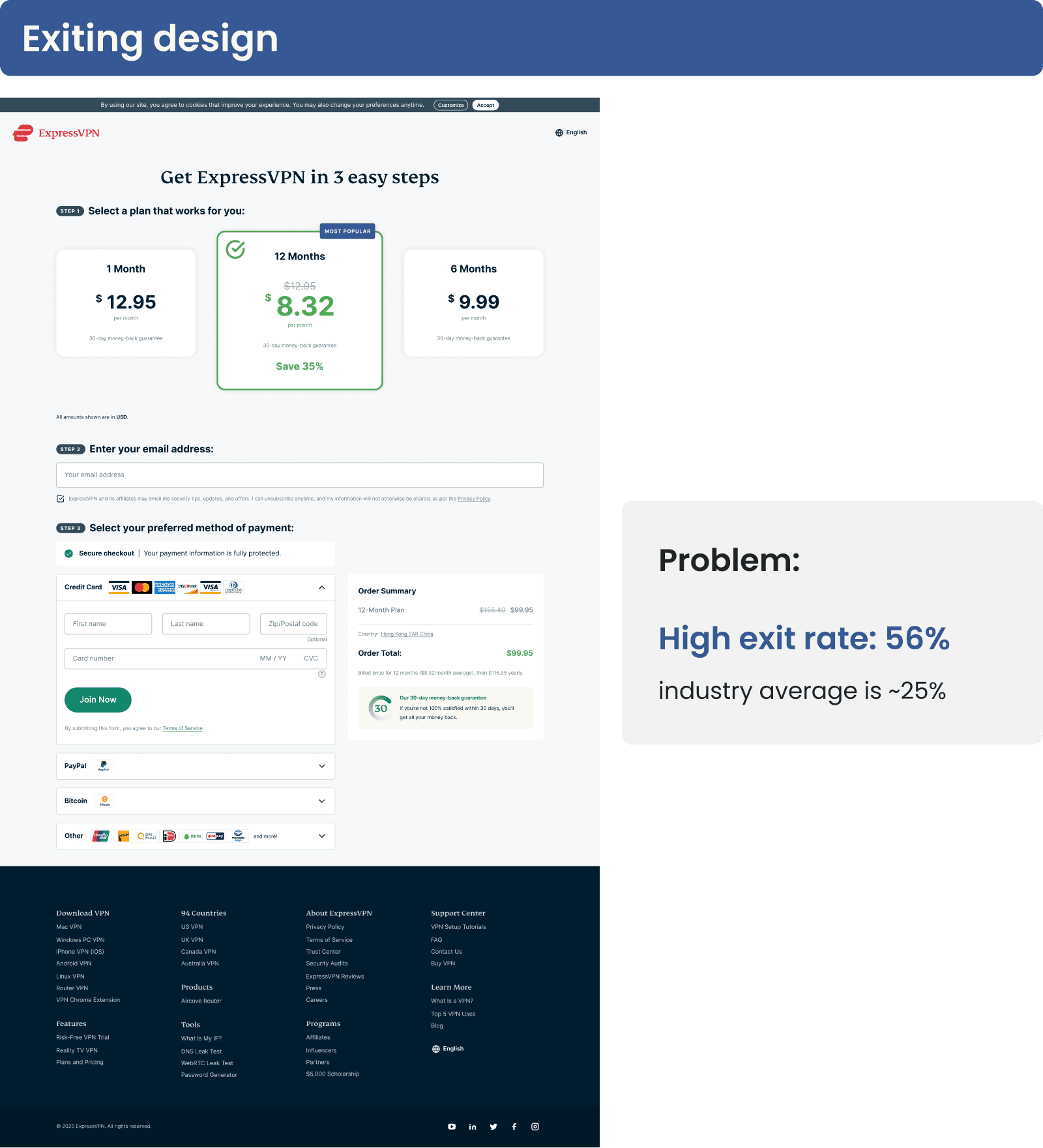
I dug into the page to understand why, and identified three root causes:
Cognitive overload: Pricing, plan selection, payment form, and order summary were all crammed into a single screen. Users had to process too many decisions at once.
Weak purchase intent: The page assumed users had already decided to buy. In reality, many were still evaluating — comparing plans, checking prices, or deciding if they needed a VPN at all. There was nothing on the page to reinforce why ExpressVPN was the right choice.
No progressive commitment: The jump from "browsing" to "enter your payment details" was too abrupt. There was no intermediate step to build confidence.
Competitor Research
I analyzed checkout flows across high-converting SaaS and subscription products to see how the market handled this.
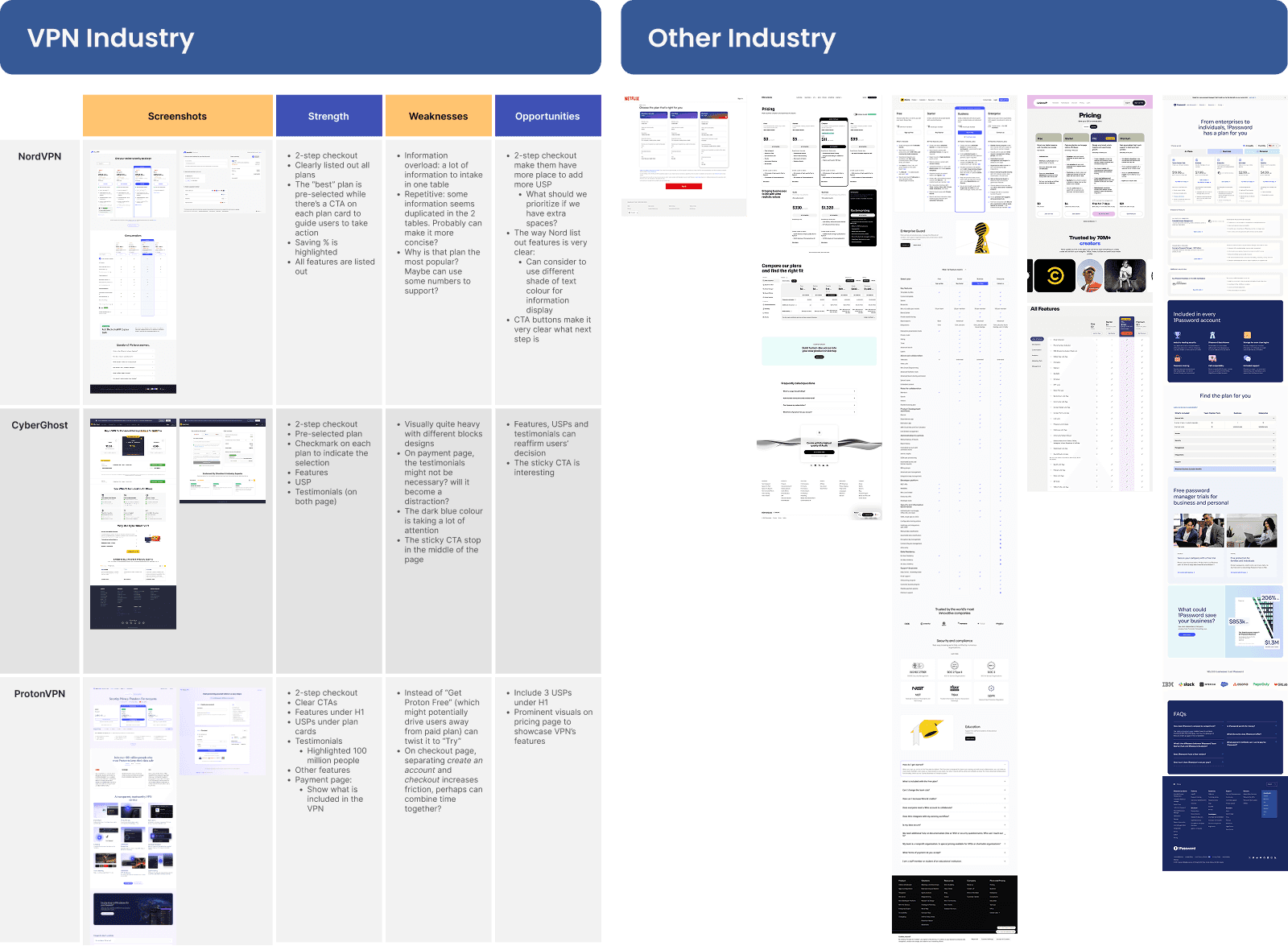
The pattern was clear:
Most successful platforms used a 2-step checkout — a dedicated pricing/plan selection step before the payment form. This approach does two things: it lets price-checking users engage without feeling pressured, and it creates a micro-commitment (choosing a plan) that increases follow-through on the payment step.
This research became critical later when I needed to convince senior management to approve the approach.
The Pushback
When I proposed splitting the checkout into two steps, senior management pushed back. Their concern was the classic one: adding a step adds friction, and friction kills conversion.
It was a reasonable objection, and likely the original rationale behind the single-page checkout. But the data told a different story: the single page was already failing at 56% exit rate. The friction wasn't coming from the number of steps; it was coming from the complexity packed into one step.
I made the case using the competitor research: the highest-converting products in the space had already validated that a 2-step flow outperforms a cluttered single page. The additional "step" actually reduces perceived effort by breaking one overwhelming decision into two manageable ones.
This got buy-in to move forward.
Framing the Design Challenge
With alignment secured, I facilitated a "How Might We" workshop with stakeholders from product, marketing, and engineering to frame the problem from multiple angles:
How might we
Educate users on why ExpressVPN is the right choice before asking them to pay?
How might we
Simplify the checkout experience so pricing, plan selection, and payment each get the focus they deserve?
How might we
Serve users who are just checking pricing, while still increasing purchase intent for those who are ready to buy?
These three questions shaped every design decision that followed.
Design Solution
I designed a 2-step checkout flow that separates the decision from the transaction:
Step 1: Pricing Page — Build Intent
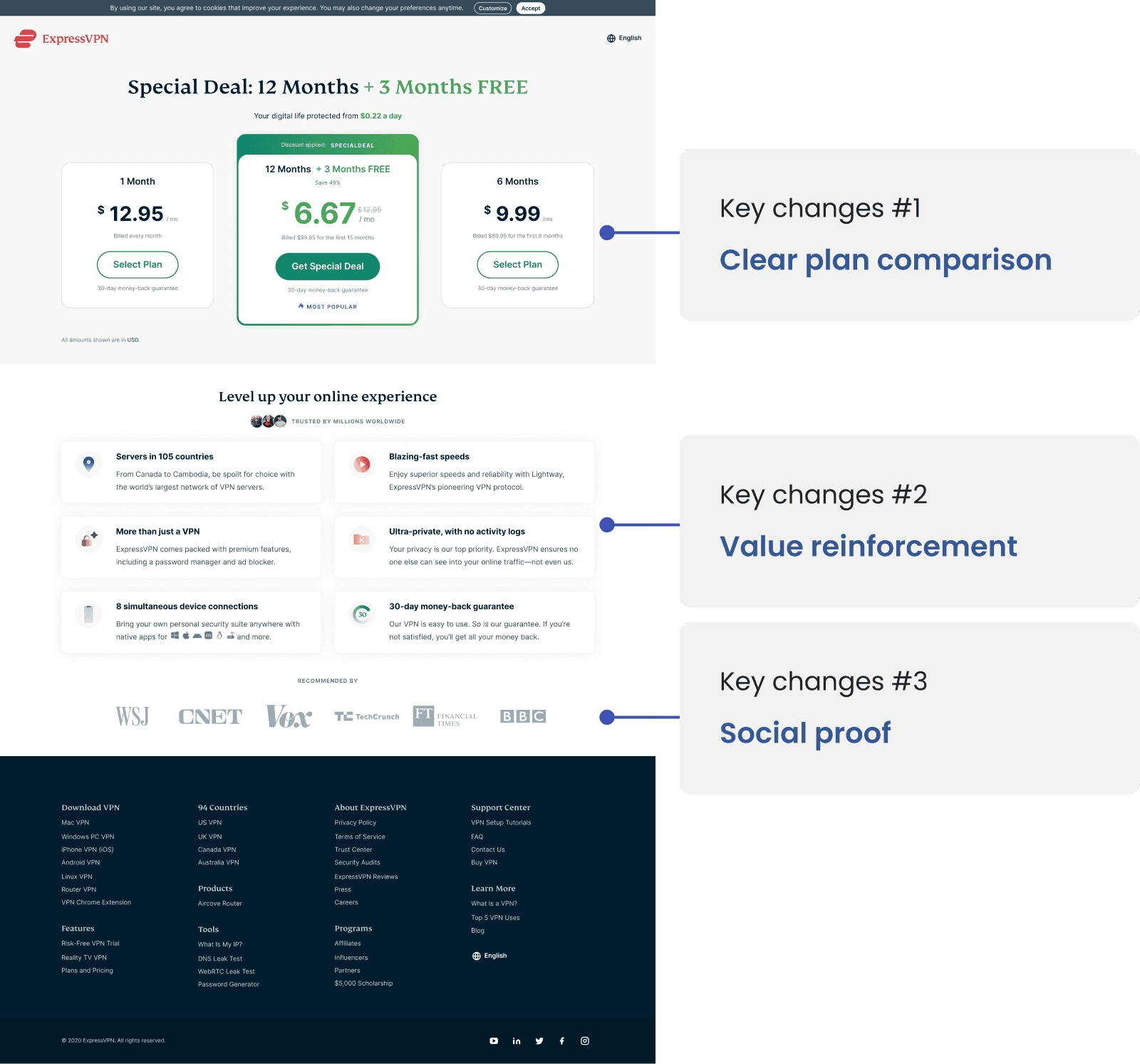
The first step is where users choose their plan. But it's designed to do more than show prices:
Clear plan comparison. The three plans are presented side-by-side with savings highlighted, so users can evaluate quickly without scrolling or calculating.
Value reinforcement. Key selling points (speed, device coverage, money-back guarantee) appear on this page — not buried in marketing pages. This is the last chance to address "do I really need this?" before payment.
Social proof. Trust signals like review scores and user count appear here, timed to the moment of highest doubt.
The micro-commitment of selecting a plan ("Get ExpressVPN") creates psychological momentum heading into Step 2.
Step 2: Payment Page — Close the Transaction
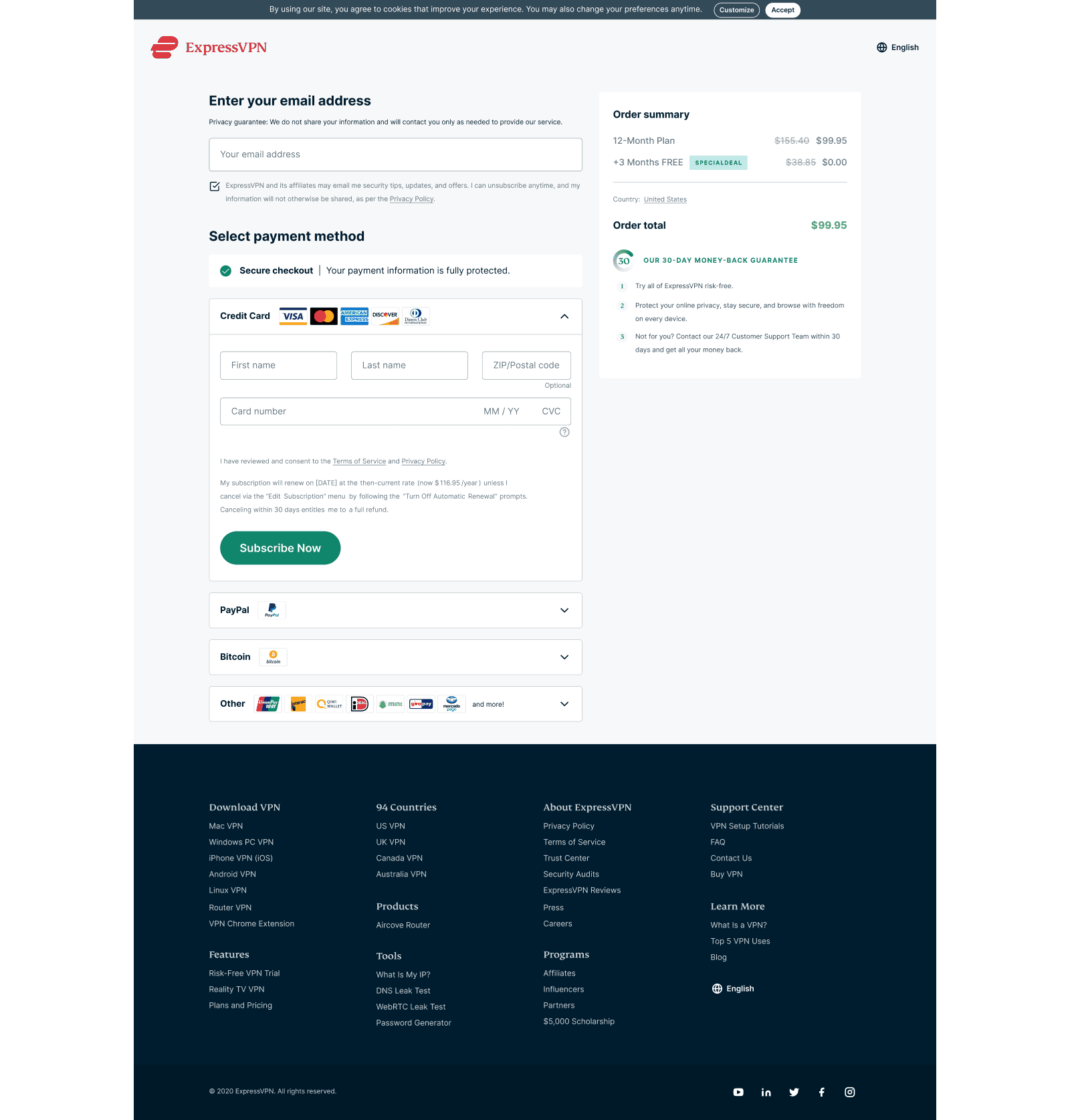
With the plan already chosen, the payment page is now singularly focused: enter your details and complete the purchase. No pricing distractions, no plan comparisons, no USP copy competing for attention.
The selected plan is summarized at the top as confirmation, and the layout is clean enough that the user's only remaining decision is which payment method to use.
The Full Flow
Results
The redesigned checkout shipped as a full replacement of the original single-page flow.
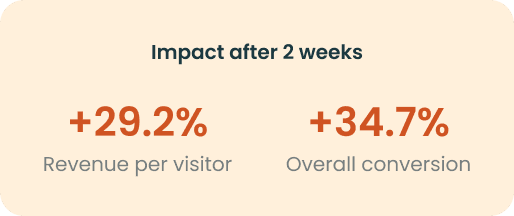
+29.2% increase in revenue per visitor. The 2-step flow didn't just convert more users — it converted higher-value transactions.
+34.7% increase in conversion rate. The "extra step" that stakeholders worried would hurt conversion did the opposite. Reducing cognitive load per step outweighed the cost of an additional click.
We also hypothesized that the redesign would reduce refund rates, since users who go through a more deliberate selection process are more likely to be intentional purchasers. This wasn't measured in the initial launch window but remains a metric to track.
What I Learned
More steps = more friction" is a myth — complexity per step is what matters. The biggest lesson from this project is counterintuitive: adding a step improved conversion by 34.7%. The original single-page checkout felt simpler on paper but was actually asking users to make too many decisions simultaneously. Splitting the cognitive load across two focused steps reduced the perceived effort, even though the actual steps increased.
Evidence beats instinct when managing up. Senior management's pushback was reasonable and experience-based. I didn't win the argument by disagreeing — I won it by showing data from competitor research that demonstrated the pattern already worked elsewhere. This changed how I approach stakeholder conversations: lead with evidence, not opinion.
The order page isn't just a form — it's the last persuasion touchpoint. Before this project, I thought of checkout as a transactional UI problem. Now I see it as the final moment to address doubt. Designing Step 1 as a persuasion layer (not just a pricing table) is what drove the results.
Let's Connect!
Always down for collaborations. I love to make products even more meaningful.